Published 26/05/2026
For most industries, summer signals a slowdown. In construction, it often creates the opposite effect.
Longer daylight hours, improved weather conditions and tighter delivery deadlines mean many construction firms accelerate project schedules between June and September. But while summer can increase site productivity, it also exposes operational weaknesses that remain hidden during quieter periods.
Labour shortages intensify. Communication gaps widen. Delays become more expensive. Admin teams become overloaded. And without real-time visibility across projects, small inefficiencies quickly compound into costly operational problems.
For construction businesses across the UK, summer is no longer just a busy season. It is a pressure test for operational resilience.
The Summer Construction Surge
The UK construction sector continues to operate under significant demand pressure. According to the Office for National Statistics, construction new orders increased by 5.6% in 2024, reaching more than £71.7 billion.
At the same time, the industry faces an ongoing labour crisis. Government-backed sector assessments estimate that an additional 251,500 workers will be needed between 2024 and 2028 to meet construction demand.
Summer amplifies this challenge.
Projects that may have progressed steadily during winter often shift into compressed delivery programmes during warmer months. Contractors attempt to maximise weather windows, increase output and meet financial year targets before autumn slowdowns begin.
This creates several operational pressures simultaneously:
- More subcontractors working across multiple sites
- Higher volumes of RFIs, variations and documentation
- Increased procurement activity
- Greater scheduling complexity
- Faster decision-making requirements
- Higher risk of communication breakdowns
The result is an industry operating at maximum capacity while already stretched for resources.
Labour Shortages Become Operational Problems
Labour shortages are often discussed as a recruitment issue. In reality, they quickly become an operational efficiency issue.
When skilled workers are limited, every hour matters more. Every missed update, delayed approval or duplicated task creates additional strain on already overstretched teams.
Industry reports show the UK construction sector remains one of the worst affected industries for workforce shortages, with skills gaps continuing to delay projects and inflate costs.
During summer, this creates a knock-on effect across operations:
Site Teams
Site managers spend more time coordinating labour movements, chasing updates and managing reactive issues instead of driving productivity.
Office Teams
Admin and operations teams face surges in paperwork, procurement tracking, compliance checks and communication requests.
Leadership Teams
Directors and project leads often lack real-time visibility into project bottlenecks until delays have already impacted programme delivery.
The challenge is not simply a lack of labour. It is the inability to operate efficiently with the labour available.
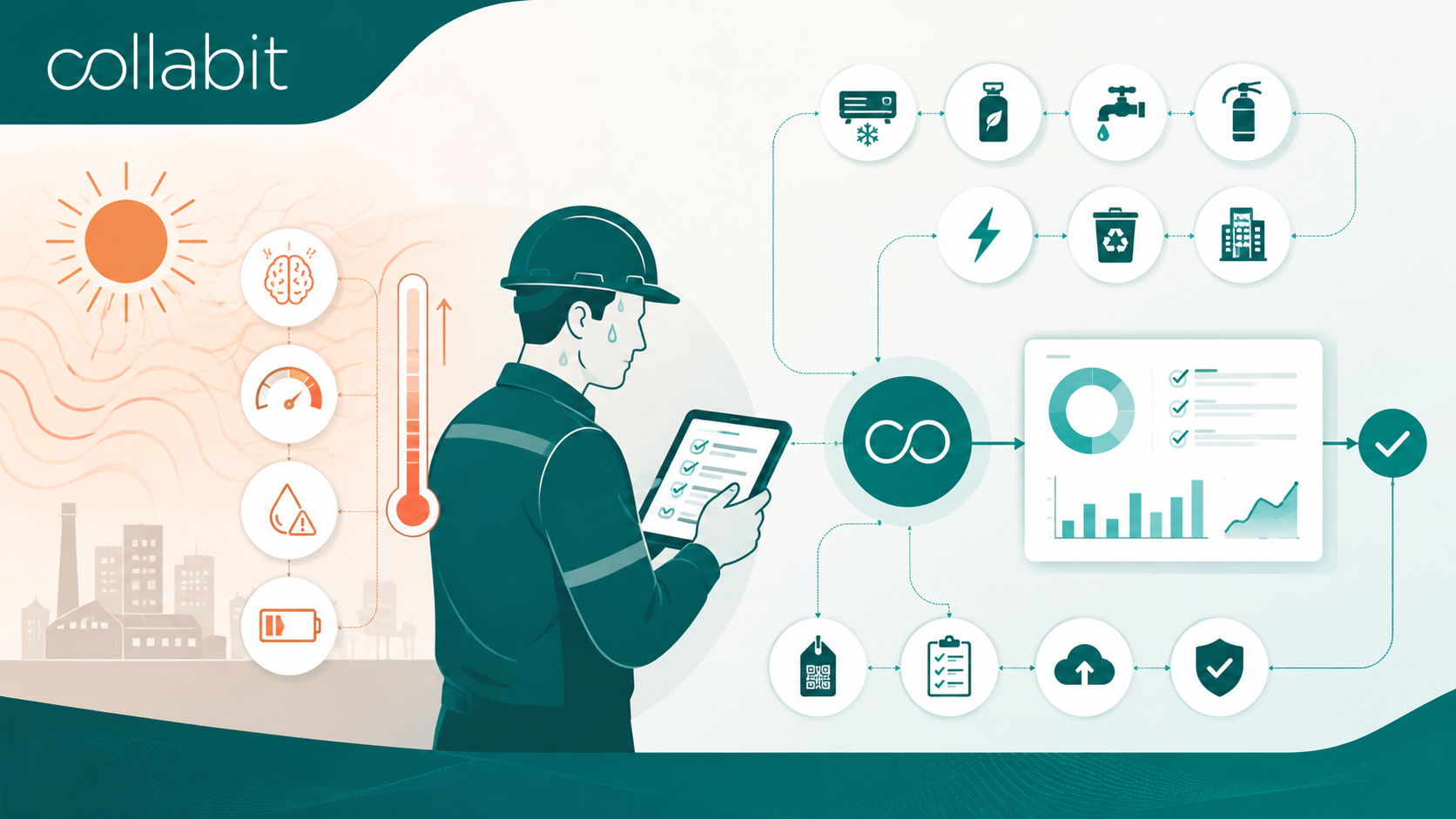
Heat, Fatigue and Human Performance
Summer productivity gains are often offset by human performance challenges that receive less attention.
Construction remains one of the most physically demanding industries in the UK. Longer days and higher temperatures can contribute to:
- Worker fatigue
- Reduced concentration
- Increased absence rates
- Slower decision-making
- Higher safety risks
The Health and Safety Executive continues to highlight construction as one of the UK’s highest-risk sectors for workplace incidents and stress-related operational pressure.
At the same time, operational staff behind the scenes experience a different type of pressure.
Project coordinators, document controllers and commercial teams often deal with significant increases in administrative workload during summer delivery periods. Faster project velocity means more emails, more approvals, more compliance tracking and more reporting demands.
Without connected systems, this creates operational friction that directly impacts profitability.
The Hidden Cost of Poor Operational Visibility
One of the biggest issues construction firms face during summer is fragmented information.
When project updates live across disconnected spreadsheets, WhatsApp groups, emails and paper-based processes, teams lose time constantly searching for information instead of acting on it.
This becomes particularly damaging during peak operational periods.
According to industry analysis, every 1% increase in absenteeism can drive a 1.5% increase in labour costs due to project disruption and replacement pressures.
Now combine that with:
- Delayed approvals
- Missed procurement updates
- Incomplete site records
- Untracked actions
- Communication silos
The operational impact becomes significant.
For many construction businesses, summer exposes the true cost of disconnected workflows.
Why Construction Firms Need Better Operational Coordination
The firms performing best during high-pressure delivery periods are not necessarily the ones with the largest workforce.
They are the ones with the clearest operational visibility.
Modern construction businesses increasingly require:
- Centralised project communication
- Live operational tracking
- Real-time task visibility
- Faster document access
- Clear accountability across teams
- Reduced administrative duplication
This is where operational software becomes critical rather than optional.
How Collabit Supports Construction Operations During Summer
Collabit helps construction businesses maintain operational control during periods of increased pressure.
Instead of relying on fragmented systems and disconnected communication, teams can manage projects, workflows and operational processes from one central platform.
During summer delivery periods, this becomes particularly valuable because it enables:
Improved Team Coordination
Site teams, office staff and leadership can work from the same live operational data, reducing communication delays and duplicated work.
Faster Access to Information
Critical project information, updates and actions remain accessible in one place, helping teams make quicker decisions.
Reduced Administrative Burden
Automated workflows and centralised processes reduce manual admin pressure on operational teams during busy delivery periods.
Greater Accountability
Tasks, approvals and responsibilities become visible across teams, helping prevent delays caused by unclear ownership.
Better Operational Visibility
Leadership teams gain clearer oversight of project progress, operational bottlenecks and workload pressures before issues escalate.
In an industry where summer can significantly influence annual performance, operational clarity becomes a competitive advantage.
Construction’s Summer Challenge Is No Longer Just About Delivery
The traditional summer challenge in construction used to focus on output alone.
Today, the bigger challenge is operational sustainability.
As project demand increases, labour shortages continue and administrative pressure grows, firms can no longer rely on disconnected systems and reactive workflows to manage delivery at scale.
The construction businesses that thrive during peak operational periods will be the ones that combine workforce expertise with smarter operational coordination.
Because in modern construction, productivity is no longer driven by effort alone.
It is driven by visibility, communication and operational control.