Published: 15/04/2026
“Legacy systems” get talked about like a tech problem.
But in reality, they’re a business growth problem.
And the data backs it up.
- Over 75% of IT budgets in large organisations are spent maintaining legacy systems
- Teams spend 5 to 25 hours per week just patching and managing them
- Legacy constraints contribute to 40%+ revenue loss incidents through downtime and inefficiency
- And 94% of executives say legacy tech is holding back agility
So the impact isn’t hidden anymore.
It shows up everywhere.
What legacy systems actually look like in real businesses
Not one system… but:
- Spreadsheets for assets
- Emails for job allocation
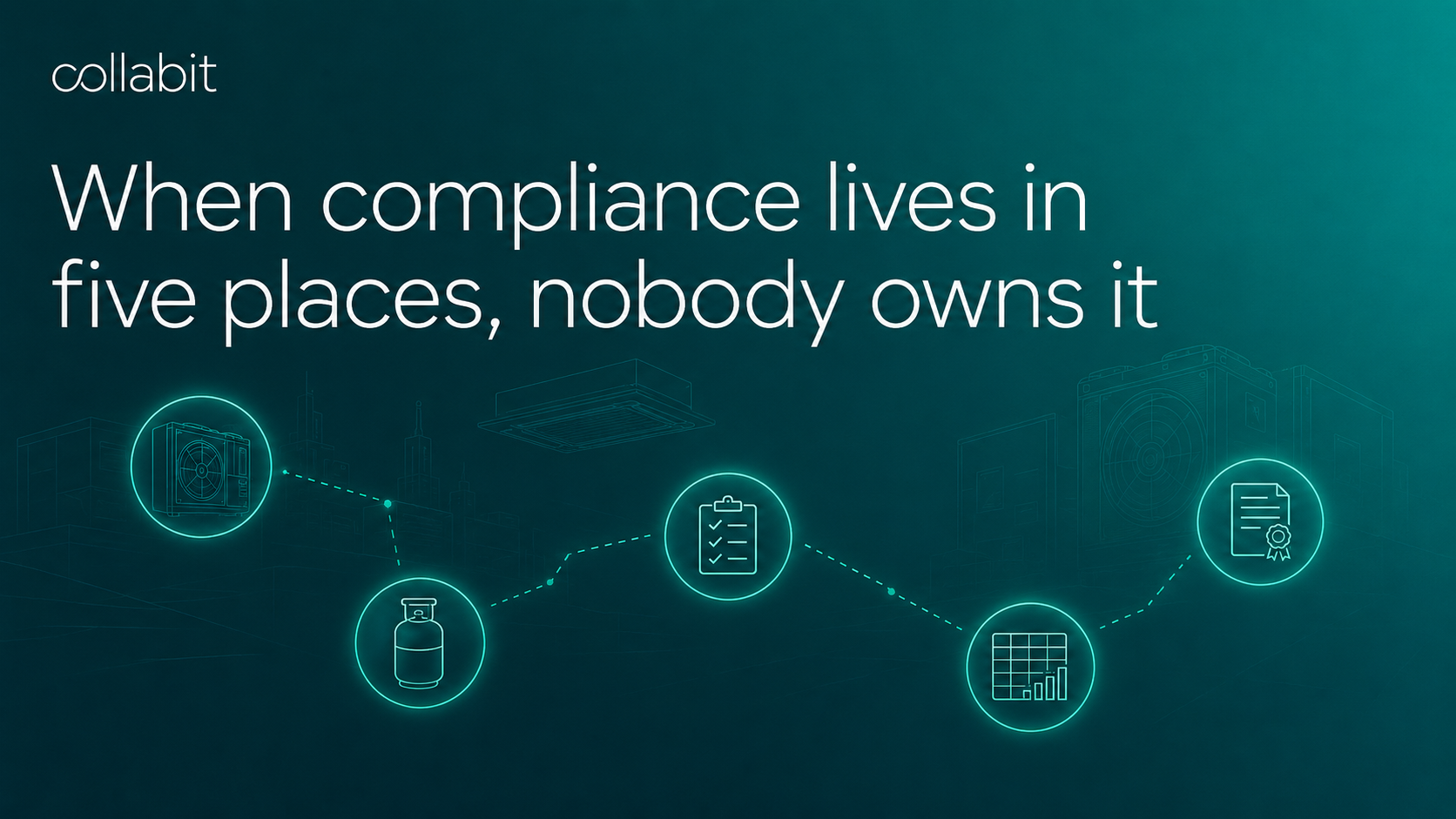
- Paper or PDFs for compliance
- Disconnected tools for reporting
- Manual checks for engineer qualifications
It “works”… until it doesn’t.
Because as soon as you grow:
- More engineers = more coordination
- More clients = more reporting
- More compliance = more risk
And suddenly:
- Information becomes fragmented
- Decisions slow down
- Mistakes increase
- Compliance becomes reactive
The real pain points (what businesses actually feel)
1. Operational inefficiency
Teams spend more time chasing data than doing the job.
– Developers alone spend up to 42% of their time fixing legacy systems
In service businesses, that translates to:
- Engineers waiting for job info
- Admin duplicating data
- Managers chasing updates
2. Lack of visibility
Data exists… but it’s not connected.
You can’t answer:
- Who’s qualified for this job?
- What’s been serviced and when?
- Where are compliance gaps?
3. Compliance risk
Legacy systems rely on after-the-fact checks.
Which leads to:
- Wrong engineer assigned
- Missing service records
- Audit gaps
- Inconsistent reporting
4. Inability to scale
What worked at:
- 5 engineers x breaks at 15
- 50 clients x breaks at 200
Because processes weren’t built to scale.
Where Collabit changes the game
The shift isn’t just “new software”…
It’s moving from:
reactive systems
to
structured, operational workflows
HVAC / Refrigeration / FGAS Contractors
Pain:
- Engineer qualifications tracked manually
- Jobs assigned based on availability, not competency
- Compliance recorded after the job
Collabit fixes this by:
- Embedding engineer certifications into the system
- Matching engineers to jobs based on qualifications
- Preventing underqualified engineers being assigned
- Automatically logging job and compliance records in real time
Compliance becomes part of the job, not a follow-up
Facilities Management & Estates Teams
Pain:
- Asset data spread across systems
- No clear service history
- Difficult to prove compliance across sites
Collabit fixes this by:
- Creating a central asset register
- Linking jobs, engineers, and compliance records to each asset
- Providing real-time visibility across sites and services
One source of truth across the estate
Service & Maintenance Businesses
Pain:
- Job tracking inconsistent
- Engineers logging work differently
- Reporting takes hours or days
Collabit fixes this by:
- Standardising job workflows
- Ensuring consistent data capture across engineers
- Automating reporting from live operational data
No more chasing paperwork or rebuilding reports
Compliance-Driven Organisations (Healthcare, Public Sector, Education)
Pain:
- Heavy audit requirements
- High risk of missed records
- Manual compliance tracking
Collabit fixes this by:
- Structuring compliance into the workflow itself
- Creating audit-ready records automatically
- Providing full traceability across operations
Confidence in compliance, not just evidence after the fact
The real shift
Legacy systems rely on:
People remembering
Processes being followed manually
Checks happening after things go wrong
Modern systems like Collabit:
Build compliance into the workflow
Remove gaps before they happen
Give visibility in real time
Final thought
The businesses that struggle to grow aren’t lacking effort.
They’re held back by systems that were never designed for scale.
Because growth doesn’t break businesses…
It exposes the cracks that were already there